
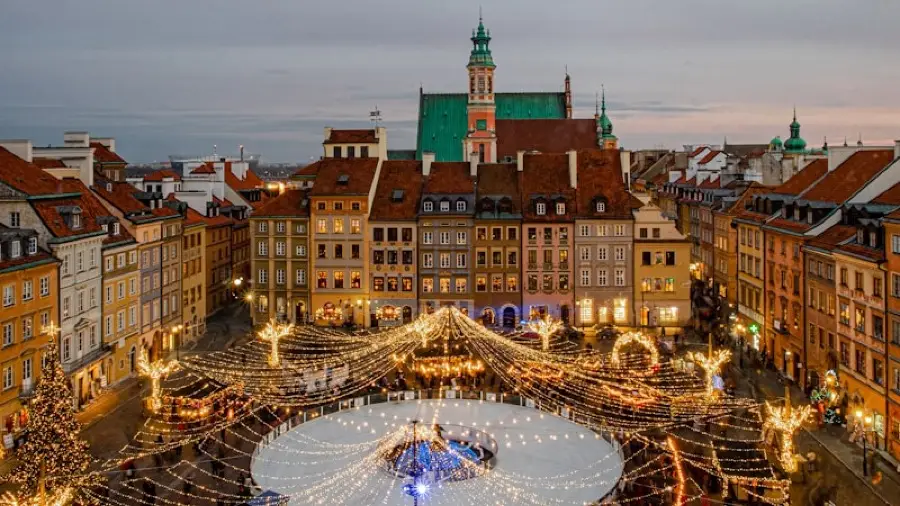
Old Town
The fully post-war-rebuilt historic core — a UNESCO site.
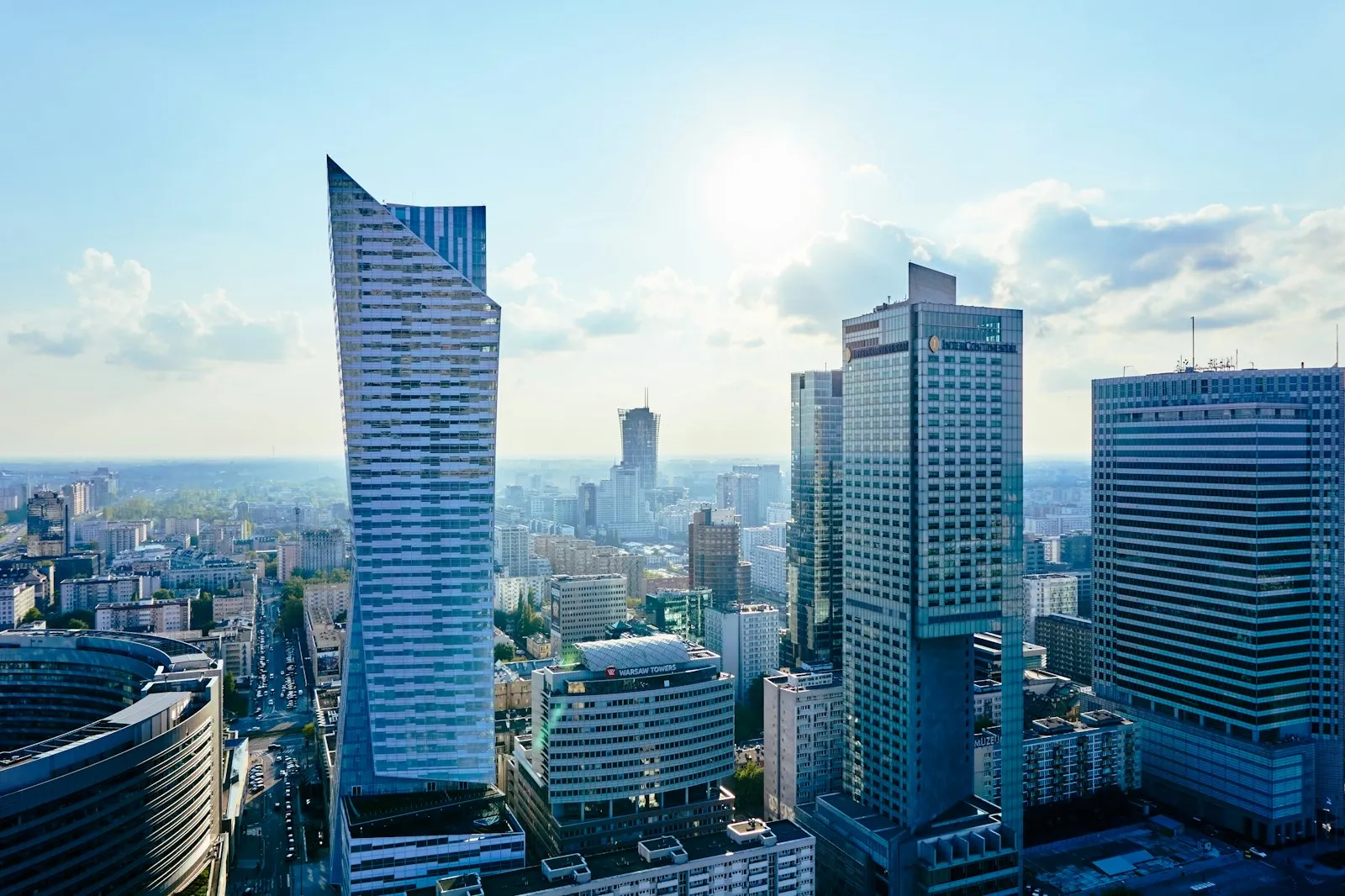
Poland's capital — a city rebuilt from scratch
Buses from Warsaw run regularly, with tickets from roughly 1,755 ₴ — paid to the driver in the local currency on boarding, so the exact sum follows the exchange rate. The most popular direction is Lviv, 7–9 h on the road. A seat is reserved online with no prepayment.
Fares start at 1,755 ₴ — the exact price depends on the destination, the carrier and the departure date. The cheapest directions are Rivne — ≈ 1,755 ₴, Lviv — ≈ 1,850 ₴, Zhytomyr — ≈ 1,920 ₴.
The most popular directions are Lviv, Ternopil, Sumy, Kyiv, Rivne. The full list with schedules and fares is on this page.
Pick a destination and a date in the search, choose a trip and a seat, enter passenger details and pay by card or choose to pay the driver on boarding. No account is needed and the confirmation arrives by email.
Warsaw is Poland's economic and cultural heart. After the Second World War the historic old town was rebuilt from scratch, guided by Canaletto's paintings — today the Old Market is a UNESCO site once again.
Warsaw is the main transit hub for Ukraine-to-Western-Europe travel. Zachodnia Coach Station handles dozens of international routes daily from Kyiv, Lviv, Ivano-Frankivsk and Chernivtsi.
The city is fast and modern — a metro, trams and night buses keep working together, and observation decks on the Palace of Culture and Varso Tower cost less than in most European capitals.
The fully post-war-rebuilt historic core — a UNESCO site.
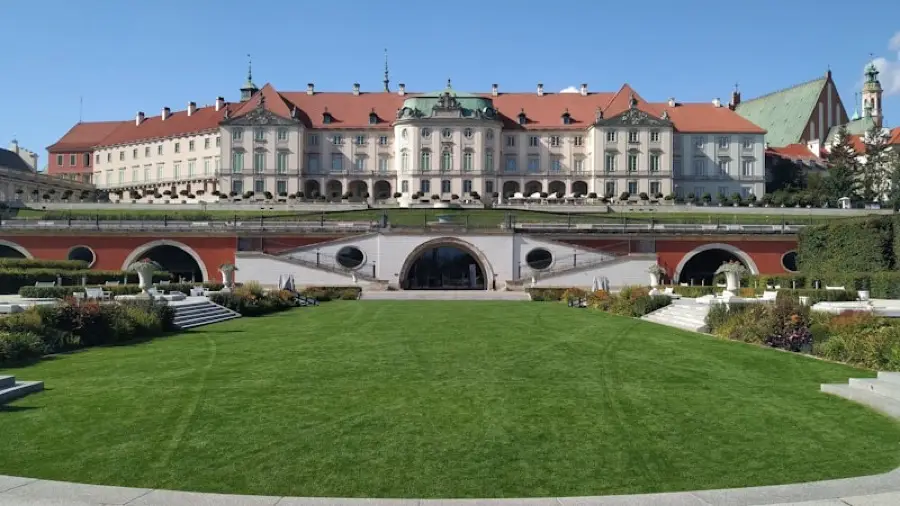
The former royal residence with a rich painting collection.
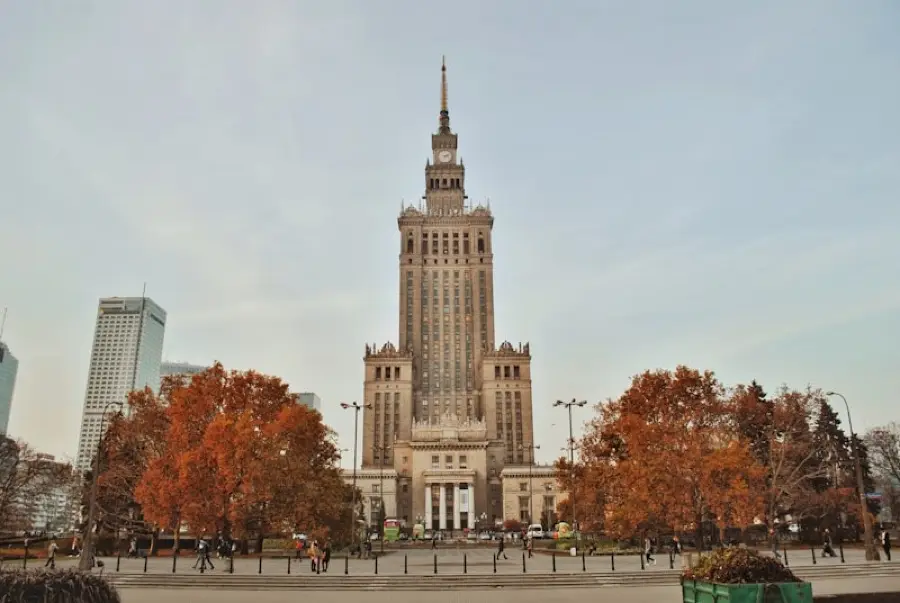
A 1955 Stalinist skyscraper with an observation deck on the 30th floor.
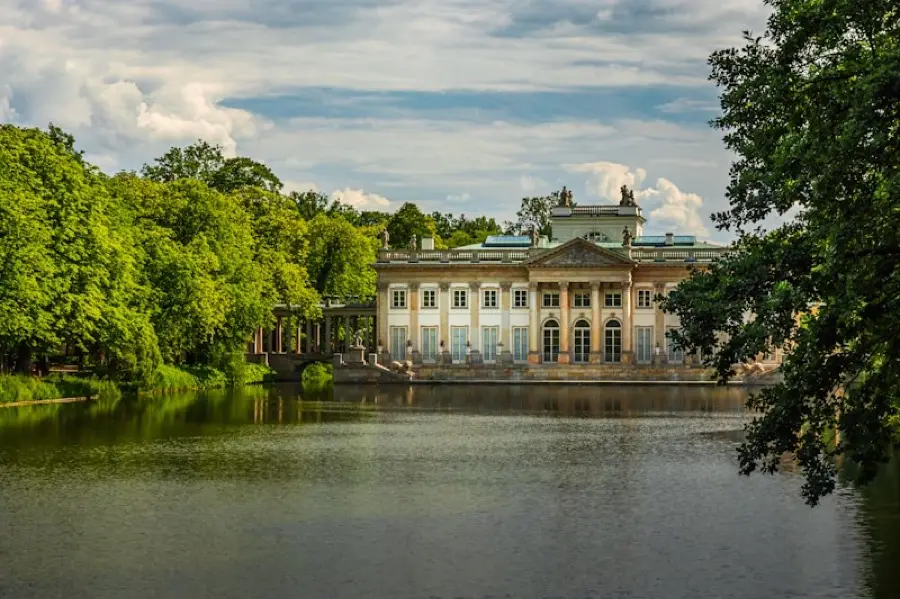
The city's largest park, with a palace-on-the-water and free-roaming peacocks.
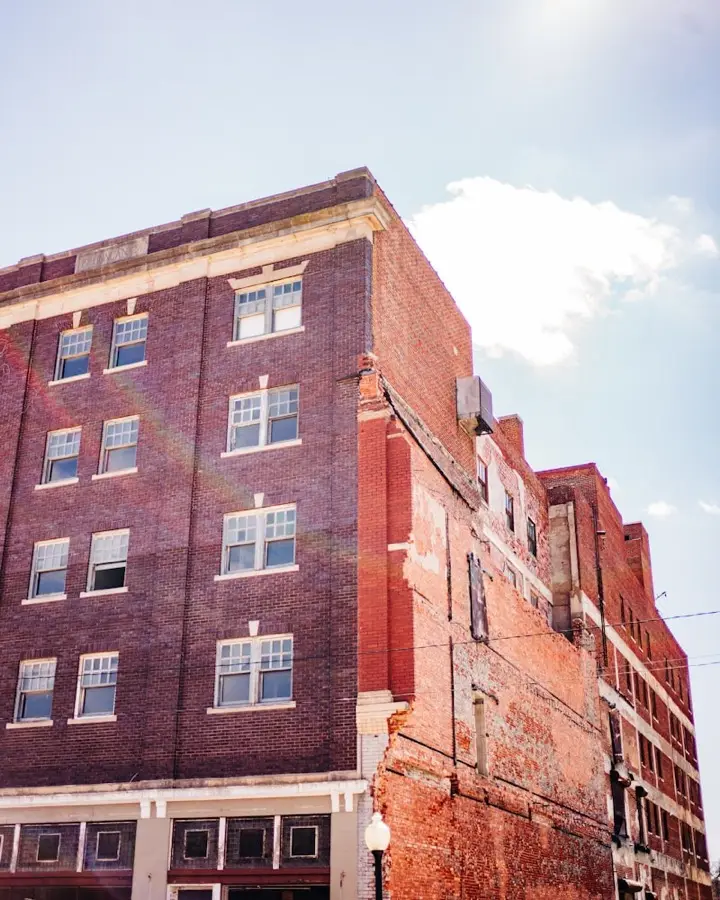
One of Europe's best-known interactive museums, dedicated to the 1944 Uprising.
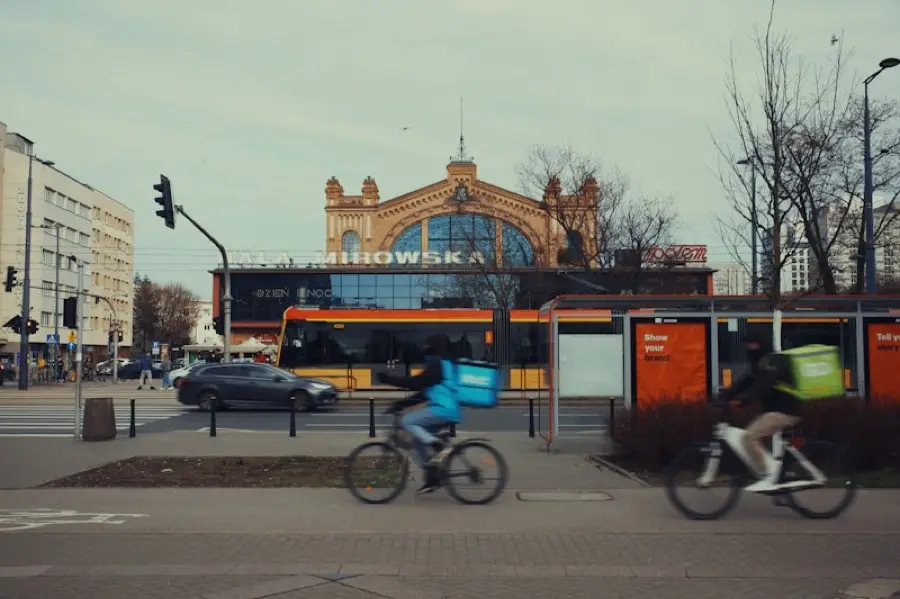
Suburban train, metro or bus — a quick comparison.
The fastest option is the SKM suburban train from Warszawa Zachodnia to Warszawa Centralna — 7 minutes.
Buses 127 or 517 run to Rondo Daszyńskiego metro station on yellow Line M2.
Tickets sell from yellow machines on every platform, or via the jakdojade app. A single ticket is about 4 PLN.
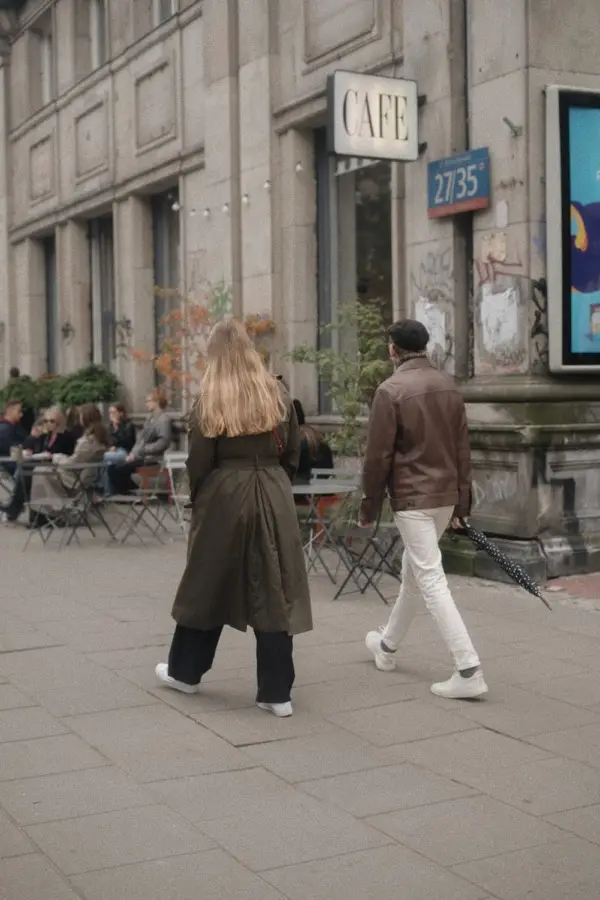
Milk bars, pierogi and modern bistros.
Bar mleczny (milk bar) is the Soviet-era format with strikingly low prices — try Bar Prasowy or Bar Bambino.
Modern street food lives at Hala Koszyki and Hala Gwardii — food courts inside rebuilt market halls.
For great pierogi, head to Zapiecek or Pierogarnia Stary Toruń. One portion easily feeds two.
Booking a bus to Warsaw online with SoloWay is simple: compare carriers, departure times and "from" prices, choose your seat, and pay by card or in cash to the driver. Your e-ticket arrives by email right away, and services run regularly throughout the year.